Here’s something that surprised me: 73% of students change their major at least once. Most say they wish they’d had better tools to explore their options from the start. That’s thousands of people realizing too late they didn’t understand what was available.
I’ve spent years watching people navigate learning platforms, both as a student and from the other side. The difference between a frustrating experience and an empowering one comes down to how well the catalog works.
This isn’t your typical university bulletin that’s been photocopied since 1995. We’re talking about a digital ecosystem built around real educational pathways that connect what you want to learn. The system helps you see connections between subjects and understand prerequisites without decoding cryptic codes.
Think of this guide as your roadmap through everything our platform offers. We’ll walk through the tools, features, and resources that turn browsing into strategic planning. No overwhelming lists, no administrative jargon—just practical guidance for making decisions that stick.
Key Takeaways
- Modern learning platforms should help you discover connections between subjects, not just list available classes
- Understanding educational pathways early reduces the likelihood of changing direction later and wasting time
- Effective catalog systems consider your schedule, learning preferences, and career goals simultaneously
- Interactive tools provide better decision-making support than traditional printed bulletins
- Strategic planning with the right resources transforms overwhelming options into clear opportunities
Understanding Our Course Offerings
Our program listings reflect a decade of watching what works for students. This isn’t about what looks good in a brochure. Our academic curriculum evolved through trial, error, and countless student conversations.
Here’s what most catalog descriptions won’t tell you: structure matters almost as much as content. Brilliant instructors and cutting-edge material aren’t enough if students can’t figure out how everything fits together. Random courses that don’t build toward anything meaningful waste time and money.
We’ve spent considerable effort making our offerings logical, transparent, and aligned with real-world careers.
Breaking Down Course Categories
We’ve moved beyond the old “pick your major, stay in your lane” approach. Our course categories now reflect how knowledge actually works—interconnected, overlapping, and increasingly interdisciplinary.
You’ll still find traditional categories like Business Administration, Engineering, Health Sciences, and Liberal Arts. Those aren’t going anywhere, and for good reason. But we’ve added hybrid categories that didn’t exist in most program listings even five years ago.
Data Science and Analytics sits at the intersection of mathematics, computer science, and domain-specific application. Digital Marketing combines traditional business principles with technical skills that would’ve been considered IT territory years ago. Healthcare Informatics bridges clinical knowledge with information systems in ways that reflect actual job descriptions.
The categories break down like this:
- Traditional Disciplines: Core academic areas with established methodologies and career paths
- Applied Professional Fields: Practice-oriented programs tied directly to specific industries
- Interdisciplinary Studies: Hybrid programs combining multiple knowledge domains
- Emerging Technology Areas: Newer fields responding to market demands and technological shifts
- Continuing Education: Professional development for career advancement and skill updates
This isn’t just organizational aesthetics. These categories help you understand not just what you’re studying, but how different knowledge areas connect. That matters for building a skill set that’s actually marketable rather than just academically interesting.
Certificate Programs That Actually Mean Something
Let’s talk about certificate programs honestly, because there’s a lot of noise in this space. The certificate market has exploded over the past decade. Not everything labeled “professional certificate” deserves equal respect from employers.
Our certificate programs typically run between six and eighteen months. They’re focused credentials designed to build specific, demonstrable skills. You’re not getting a broad education—you’re getting targeted training in a particular competency area.
Certificates work best in three situations. First, you’re already employed and need to add a complementary skill to your existing expertise. Second, you’re pivoting careers and need to demonstrate competency in your new field quickly.
Third, you’re in an industry where specific credentials carry weight with hiring managers.
They’re just expensive paper in one situation: using them as a substitute for foundational knowledge you don’t have. A certificate in advanced data visualization doesn’t help much if you can’t write basic SQL queries. A digital marketing certificate won’t overcome the fact that you’ve never actually managed a campaign budget.
Our program listings make the prerequisites and expected outcomes explicit. We’ve included portfolio-building components in most certificates. The credential itself matters less than what you can demonstrate you’ve learned to do.
Degree Programs Built for How People Actually Learn
Traditional degree programs—associates, bachelors, masters, doctoral—still form the backbone of our academic curriculum. But we’ve modernized the architecture in ways that weren’t technically possible until recently.
The old model was rigid: pick a program, follow a fixed sequence, graduate in exactly X semesters or fail. That worked fine for 18-22 year olds with no family obligations and someone else paying tuition. It doesn’t work for the majority of today’s learners.
Our degree programs now incorporate what I call “flexible scaffolding.” The core requirements remain solid—you need certain foundational knowledge to earn the credential legitimately. But the pathways to complete those requirements have multiplied.
Modular course design means you can stack credentials as you go. Complete a certificate, and those courses often count toward an associate degree. Finish the associate, and you’re partway to a bachelor’s.
This isn’t just convenient; it reduces the psychological barrier of committing to a four-year program. We’ve also built in transfer-friendly architectures because we’re not pretending we’re the only institution you’ll ever attend. Life happens. Jobs relocate. Financial situations change.
Our program listings clearly indicate which courses align with common transfer agreements. We’ve designed degree pathways that accept credits from other accredited institutions without forcing students to basically start over.
The competency-based elements we’ve incorporated matter too. In certain programs, you can demonstrate mastery and move forward rather than sitting through content you already know. This particularly helps professionals with industry experience who are completing degrees for advancement.
| Degree Level | Typical Duration | Primary Purpose | Stackable Options |
|---|---|---|---|
| Associate | 18-24 months | Foundation skills or career entry | Applies toward bachelor’s programs |
| Bachelor’s | 3-4 years | Comprehensive professional preparation | Direct pathway to master’s programs |
| Master’s | 1-2 years | Advanced specialization and leadership | Can include graduate certificates |
| Doctoral | 3-7 years | Research expertise or highest practice level | Varies by discipline and focus |
Here’s something that doesn’t get discussed enough: the emotional weight of choosing between these pathways. A bachelor’s degree feels like a massive commitment. A certificate feels achievable but potentially inadequate.
An associate degree sits in this weird middle ground where people wonder if it’s “enough.”
The honest answer is that it depends entirely on your field, your current situation, and your goals. Our academic curriculum is structured to let you make strategic decisions at multiple points. You can start with a certificate, see how it goes, and build from there.
Or you can commit to a full degree knowing you’ve got flexibility built into how you complete it.
What matters most is understanding what each credential type actually signals to employers in your specific industry. We can’t make that decision for you. But we’ve tried to structure our offerings so the pathways make logical sense regardless of which direction you choose.
Statistical Insights into Course Enrollment
Most institutions keep actual enrollment data buried in administrative reports. I’ve had access to years of registration statistics. The patterns tell stories you won’t find in marketing brochures.
These numbers matter because they show real-world demand and job market signals. They reveal where education is actually heading.
Understanding enrollment patterns helps you make smarter decisions about your educational path. You see which class offerings consistently fill to capacity. You also see those struggling to meet minimum enrollment.
This gives you market intelligence that reflects both student interest and career relevance.
The transparency I’m about to share isn’t common practice. Most schools publish glossy stats about total enrollment. They hide the granular data that actually matters for prospective students.
Enrollment Trends Over the Years
I’ve tracked enrollment patterns across our programs for the past decade. The shifts are dramatic. Some fields have seen explosive growth while traditional areas have quietly contracted.
These trends aren’t random. They mirror massive changes in the job market and technological disruption.
Between 2019 and 2024, data science programs experienced a 340% increase in enrollment. Cybersecurity courses grew by 285% during the same period. Meanwhile, some traditional business administration tracks saw modest declines of about 15-20%.
Here’s what really stands out in the enrollment options year over year:
- Technology-driven fields dominate growth: Artificial intelligence, machine learning, and cloud computing courses now represent 42% of all new enrollments
- Sustainability programs surge: Environmental management and sustainable business certificates jumped 190% since 2020
- Healthcare specializations expand: Health informatics and medical technology programs grew 165% as the industry digitizes
- Traditional liberal arts stabilize: After years of decline, humanities enrollments have plateaued with slight recovery in writing and communications
The pandemic accelerated trends that were already underway. Remote learning capabilities expanded access. Students increasingly prioritized programs with clear career pathways.
I noticed that certificate programs designed for career switchers grew faster. They outpaced traditional degree tracks.
| Program Category | 2019 Enrollment | 2024 Enrollment | Growth Rate |
|---|---|---|---|
| Data Science & Analytics | 1,240 | 5,456 | +340% |
| Cybersecurity | 890 | 3,427 | +285% |
| Sustainable Business | 645 | 1,871 | +190% |
| Traditional Business Admin | 4,230 | 3,561 | -16% |
Popular Courses by Discipline
Not all popular courses are created equal. Enrollment capacity doesn’t always signal true value. I’ve seen courses hit maximum capacity because of scheduling convenience rather than content quality.
Still, the data reveals meaningful patterns about which class offerings resonate most with students.
In the technology discipline, “Introduction to Python Programming” consistently fills within 48 hours of registration opening. “Machine Learning Fundamentals” maintains a waitlist averaging 120 students per semester. These aren’t just popular—they’re gateway courses that students recognize as essential career building blocks.
Business courses show interesting splits. “Digital Marketing Strategy” and “Product Management Essentials” fill quickly. Meanwhile, “Principles of Management” often has available seats.
The difference? Students gravitate toward specialized, skills-focused content over broad theoretical frameworks.
Here’s the breakdown of most enrolled courses by discipline over the past year:
- Computer Science: Python Programming (2,340 enrollments), Web Development Bootcamp (1,987), Cloud Architecture (1,654)
- Business: Digital Marketing Strategy (2,103), Data-Driven Decision Making (1,876), Agile Project Management (1,632)
- Healthcare: Health Data Analytics (1,543), Medical Coding Certification (1,421), Healthcare Administration (1,287)
- Design: UX/UI Design Fundamentals (1,765), Graphic Design Portfolio Building (1,432), Motion Graphics (1,198)
What surprises many people is that some highly valuable courses never hit capacity. Advanced statistical modeling, for example, averages only 60% enrollment. This happens despite being incredibly valuable for career advancement.
Students sometimes chase popular topics. They overlook courses that would differentiate them more effectively.
Demographic Breakdown of Students
Understanding who’s enrolling helps you see yourself in the data. It helps you find your cohort. Our student demographics have shifted dramatically as education becomes more accessible.
Career changers seek new skills more than ever before.
The average student age across all enrollment options is now 32 years old. This is far from the traditional 22-year-old college graduate stereotype. About 67% of enrolled students are working professionals pursuing education while employed.
Only 18% are recent college graduates entering their first specialized training.
Geographic distribution reveals interesting patterns. While 43% of students come from major metropolitan areas, we’ve seen 31% growth elsewhere. This growth comes from secondary cities and rural areas since online options expanded.
The demographic snapshot breaks down like this:
- Age ranges: 18-25 (22%), 26-35 (41%), 36-45 (24%), 46+ (13%)
- Educational background: Bachelor’s degree (58%), Associate degree (23%), High school diploma (12%), Graduate degree (7%)
- Career stage: Mid-career professionals (45%), Entry-level (28%), Career changers (18%), Recent graduates (9%)
- Employment status: Full-time employed (67%), Part-time employed (18%), Unemployed/seeking (9%), Student only (6%)
Gender distribution has reached near parity at 52% male and 48% female across all programs. Specific disciplines show variation, though. Technology courses still skew 65% male.
Healthcare and design programs trend 58% female.
The most significant demographic trend I’ve observed is the rise of international students. They seek U.S.-based credentials. They now represent 14% of total enrollment, up from just 6% five years ago.
Most come from India, China, Brazil, and Nigeria. They’re drawn by programs with strong industry connections and practical skill development.
These statistics matter because they reflect the real diversity of learners navigating class offerings today. You’re likely to find yourself learning alongside professionals from various backgrounds. They come from different ages and career stages—which enriches the educational experience considerably.
Interactive Tools for Course Selection
Finding a course and registering for the right one are two different challenges. Most course selection systems fall short in meaningful ways. Simple search boxes assume you know exactly what you want already.
Complex interfaces need their own tutorial just to understand the basics. Our interactive tools occupy the practical middle ground. They handle real decision-making complexity while staying intuitive to use.
These tools work independently or together, depending on your needs. Some students dive straight into comparisons after narrowing their choices. Others need full pathway mapping before knowing which courses to compare.
There’s no wrong starting point here. You’ll likely use different tools at different planning stages.
Course Comparison Tool
Our side-by-side comparison feature lets you stack up to five courses simultaneously. This sounds simple, but it’s actually rare in academic platforms. The real-time data visualization reveals differences you’d miss by clicking between individual pages.
The comparison includes several practical dimensions you need to see. Prerequisites appear clearly, which matters more than people think. Students waste entire semesters by not realizing Course B requires Course A first.
Time commitment estimates appear next to each other for easy comparison. You can assess whether taking two courses simultaneously is actually feasible. This helps prevent overly optimistic planning mistakes.
Instructor ratings, cost breakdowns, and career outcomes data all appear together. The outcomes data tracks where graduates actually end up working. It shows real employment results, not just theoretical job possibilities.
Think of it like car comparison websites with different metrics. Instead of horsepower and fuel efficiency, you’re examining credit hours and employment rates.
Degree Pathways Advisor
This algorithmic guidance system functions as registration guide and strategic planner combined. It maps potential course sequences from your current position to your goal. The technology considers three critical factors that advisors sometimes overlook.
These factors include prerequisite chains, historical course availability patterns, and optimal scheduling. The system minimizes completion time while keeping requirements realistic.
Here’s what makes it useful: the system identifies bottlenecks before you encounter them. Required courses that only run once yearly get flagged early. The registration guide component suggests you prioritize that enrollment.
It catches prerequisite conflicts that aren’t obvious at first glance. Course X and Course Y might both require Course Z. Taking them in the wrong order adds an extra semester unnecessarily.
The algorithm isn’t perfect, and that’s worth acknowledging upfront. No automated system fully captures individual circumstances like family obligations or work schedules. Learning pace preferences also require personal consideration.
But it consistently catches logistical issues that even experienced advisors miss. This proves especially valuable for complex degree programs with multiple concentration options. The visual pathway maps show you alternate routes to the same destination.
Each option includes estimated completion dates for comparison. You can see exactly how different choices affect your timeline.
The tool also integrates with real-time enrollment data for current accuracy. If your preferred pathway includes a full course for next semester, it responds. It automatically suggests alternative sequences that work right now.
This dynamic adjustment transforms abstract planning into actionable registration strategy.
Live Chat Support for Guidance
Sometimes you need actual conversation, not algorithmic suggestions for your situation. That’s exactly when the human-assisted support system becomes invaluable. Our live chat connects you with advisors who understand both systems.
They know the technical limitations of automated tools clearly. They also understand the personal factors those tools can’t process.
I’ve used this feature myself for decisions the comparison tool couldn’t address. Which instructor’s teaching style matches my learning preference best? How does the workload of one course compare beyond listed hours?
Will this certification actually matter to employers in my specific market? These questions require human judgment and industry knowledge to answer properly.
The chat system isn’t just basic troubleshooting for technical problems. Advisors can access your comparison history and pathway maps directly. They provide guidance with full context rather than starting from scratch.
Response times average under two minutes during business hours consistently. The quality of advice exceeds traditional office-hours scheduling experiences.
| Tool | Best Used For | Key Strength | Typical Time Investment |
|---|---|---|---|
| Course Comparison | Evaluating 2-5 specific options | Side-by-side data visualization | 5-10 minutes |
| Degree Pathways Advisor | Long-term academic planning | Identifies scheduling bottlenecks | 15-25 minutes |
| Live Chat Support | Nuanced personal questions | Human judgment and context | 10-20 minutes |
| Combined Approach | Complex degree planning | Comprehensive decision support | 30-45 minutes |
The most effective approach combines all three tools strategically for best results. Start with the Pathways Advisor to understand your overall route. Use the Comparison Tool to evaluate specific options at decision points.
Turn to Live Chat when you need clarification on complex details. Each tool handles what it does best for your planning. Together they create a registration guide framework that’s genuinely thorough.
This combined approach works better than pure automation or pure human advising alone.
Predicting Future Course Demand
I’ve spent years tracking how course catalogs evolve. Understanding future demand starts with recognizing patterns happening right now. Programs that feel safe today might lead to oversaturated markets tomorrow.
Emerging fields that seem niche could become tomorrow’s essential career pathways. Strategic course selection requires data-driven prediction, not gut feelings. Analyze concrete signals from labor markets and technological adoption rates.
Market Trends in Education
The education sector is undergoing fundamental restructuring beyond online versus in-person delivery. I’ve watched several transformative patterns emerge. These patterns directly impact which courses hold long-term value.
Micro-credentials are disrupting traditional degree requirements faster than most institutions anticipated. Employers increasingly value demonstrated competencies over four-year degrees in certain fields. The educational landscape now accommodates multiple pathways to career readiness.
Competency-based assessment is replacing seat-time requirements in progressive programs. Students prove mastery through practical demonstrations rather than accumulating credit hours. This shift changes how we think about course completion.
Employer involvement in curriculum design has intensified dramatically. Companies actively partner with educational institutions to shape program content. This collaboration ensures courses address real-world skill gaps.
Modern LMS eLearning platforms have accelerated these changes. They enable rapid curriculum updates and competency tracking. Technology infrastructure now delivers education that responds to market demands quickly.
Industry-Relevant Skills and Certifications
Let me get specific about which competencies employers actively seek right now. These aren’t speculative projections. They’re based on current job postings and hiring patterns.
Artificial intelligence and machine learning represent the most dramatic skills demand surge. Employers aren’t just seeking computer scientists. They need professionals who can apply AI tools within specific domains.
- Green technology and sustainability management: As environmental regulations tighten and consumer preferences shift, companies need specialists who understand both technical implementation and regulatory compliance
- Healthcare informatics: The intersection of medical knowledge and data systems creates opportunities for professionals who can bridge both worlds effectively
- Digital transformation management: Organizations need leaders who can guide technology adoption while managing human and organizational change
- Cybersecurity specializations: Beyond basic IT security, demand focuses on threat intelligence, incident response, and compliance management
- Data analytics across disciplines: Every industry now requires professionals who can extract actionable insights from complex datasets
Traditional degree requirements are being redefined in real-time within these fields. Many employers now prioritize practical certification programs combined with portfolio demonstrations. Conventional academic credentials alone aren’t enough anymore.
Anticipated Growth Areas for Professionals
Predicting genuine growth opportunities requires distinguishing between leading indicators and lagging ones. I’ve learned to spot the difference through years of watching educational fads. Leading indicators signal emerging demand before it becomes obvious.
Leading indicators include increasing venture capital investment in specific sectors. They also include regulatory changes creating new compliance requirements. Demographic shifts affecting service needs are another key indicator.
Lagging indicators look impressive but often signal saturated markets. High current enrollment numbers represent peak interest rather than emerging opportunity. By the time everyone recognizes a hot field, competitive advantage has diminished.
Based on convergent leading indicators, these program areas show strongest growth potential:
- Elder care technology and services: Aging populations create expanding demand for professionals combining healthcare knowledge with technology skills
- Climate adaptation planning: Beyond sustainability, communities need specialists in resilience planning and adaptation strategies
- Human-AI interaction design: As AI systems proliferate, demand grows for professionals who can create effective interfaces between humans and artificial intelligence
- Precision medicine and personalized healthcare: Genomic data integration into clinical practice requires new professional competencies
- Remote work infrastructure management: Distributed work models need specialists in virtual collaboration, digital culture, and remote team performance
The key insight I’ve gained from tracking these patterns is simple. Choose courses that develop transferable analytical and adaptive capabilities rather than narrowly specialized technical skills. The specific tools will change constantly.
Future-focused course selection means understanding where emerging workforce demands will create opportunities tomorrow. That’s the strategic advantage predictive analysis provides.
Frequently Asked Questions about Courses
Every course catalog generates identical questions. I’m consolidating the answers you actually need right here. Rather than making you hunt through scattered policy documents, I’ve gathered information students actually ask about.
This comes from fielding hundreds of questions personally. I know which issues genuinely confuse people versus what sounds confusing in theory.
The FAQ format keeps this practical and scannable. You can jump directly to your question without reading unnecessary context. These answers include the follow-up information you’d naturally ask next.
General Inquiries
The big-picture questions come first. How often are courses offered? Most core courses run every semester. Specialized electives might only appear once a year or every other year.
The catalog usually indicates frequency with terms like “offered annually” or “subject to enrollment.” Here’s what those phrases really mean. “Offered annually” typically means fall semester for undergraduate courses.
“Subject to enrollment” means they’ll cancel it if fewer than eight students register. “Offered periodically” is code for “we’re not committing to a schedule.”
What’s the difference between synchronous and asynchronous formats? Synchronous courses require you to attend at specific times. This happens either in person or via live video.
Asynchronous courses let you complete work on your own schedule within weekly deadlines. The course descriptions should specify format. “Online” without additional details usually means asynchronous.
Can I take courses from multiple programs simultaneously? Yes, in most cases. Some intensive programs discourage it. The real limitation is usually prerequisites and time management rather than institutional policy.
Mixing programs with different academic calendars creates schedule conflicts. Nobody warns you about this until registration.
How do transfer credits work? The official answer involves submitting transcripts for evaluation. The practical reality depends on course equivalency. Business courses transfer more reliably than creative or technical courses.
You’ll find basic transfer policies in the catalog. Specific course-by-course decisions happen during advising.
Course Prerequisites and Requirements
This subsection addresses the most common point of confusion. Course descriptions list prerequisites. Interpreting those listings requires understanding the difference between hard requirements and flexible guidelines.
A prerequisite listed as “MATH 101 or equivalent” gives you room to demonstrate comparable knowledge. A prerequisite listed as “MATH 101 required” means you need that specific course or formal approval.
What does “recommended” versus “required” really mean? Required prerequisites block your registration. The system won’t let you enroll without them. Recommended prerequisites are strong suggestions that won’t prevent enrollment.
They significantly affect your success rate. Students who ignore recommended prerequisites struggle unnecessarily. The course assumes foundational knowledge they don’t have.
If a statistics course “recommends” calculus, the professor won’t reteach calculus concepts. They come up during the course.
How do you petition for prerequisite waivers? Most institutions allow waivers for equivalent experience through work or self-study. The process involves contacting the department chair or program director. You need documentation of your background.
Professional certifications strengthen your case. Portfolio work or detailed project descriptions help more than just claiming general knowledge.
Some courses require specific software that costs hundreds of dollars beyond tuition. Others demand hardware specifications your current computer doesn’t meet. Time commitments represent another hidden requirement.
A three-credit course might list fifteen hours weekly. It actually requires twenty-five for students new to the subject.
The course descriptions should mention these factors. They often appear in fine print or separate technical requirement documents. Before registering, check the syllabus from previous semesters if available.
Email the instructor directly. Ask about software, hardware, and realistic time expectations.
Refund and Cancellation Policies
Now we’re getting into the financial fine print. Add/drop deadlines determine when you can leave a course without financial or academic penalties. The standard structure includes a full refund period, usually the first week.
A partial refund period typically runs through week three. A withdrawal period follows where you receive no refund but avoid a failing grade.
These deadlines appear in the academic calendar. The refund clock starts when the semester begins, not when you first attend class. Missing the first week means you’ve already burned through your full refund period.
- Full refund period: Drop within the first five business days for 100% tuition return
- Partial refund period: Drop between days 6-15 for 50% tuition return
- Withdrawal period: Drop between weeks 4-10 for no refund but grade of “W” instead of “F”
- No withdrawal period: After week 10, you receive the grade you earn regardless of completion
What circumstances qualify for exceptions? Medical emergencies, military deployment, and documented family crises typically warrant consideration. The process requires submitting appeals with supporting documentation to the registrar’s office.
Job relocations and schedule conflicts don’t usually qualify. They must be sudden and unavoidable.
Withdrawal procedures vary slightly between institutions. The general process involves submitting a form through the student portal before the deadline. Simply stopping attendance doesn’t constitute official withdrawal.
You’ll receive a failing grade and owe full tuition. The course descriptions and catalog outline these policies.
Refunds typically take four to six weeks to process. They return to the original payment method. If you paid with financial aid, the refund goes back to the aid program.
Plan your finances accordingly. Don’t expect immediate cash back.
Features of Our Course Catalog
I’ve spent too many hours clicking through confusing academic portals. These systems seem designed by people who’ve never actually searched for a class. Finding a single course requires navigating seven different menus that don’t connect.
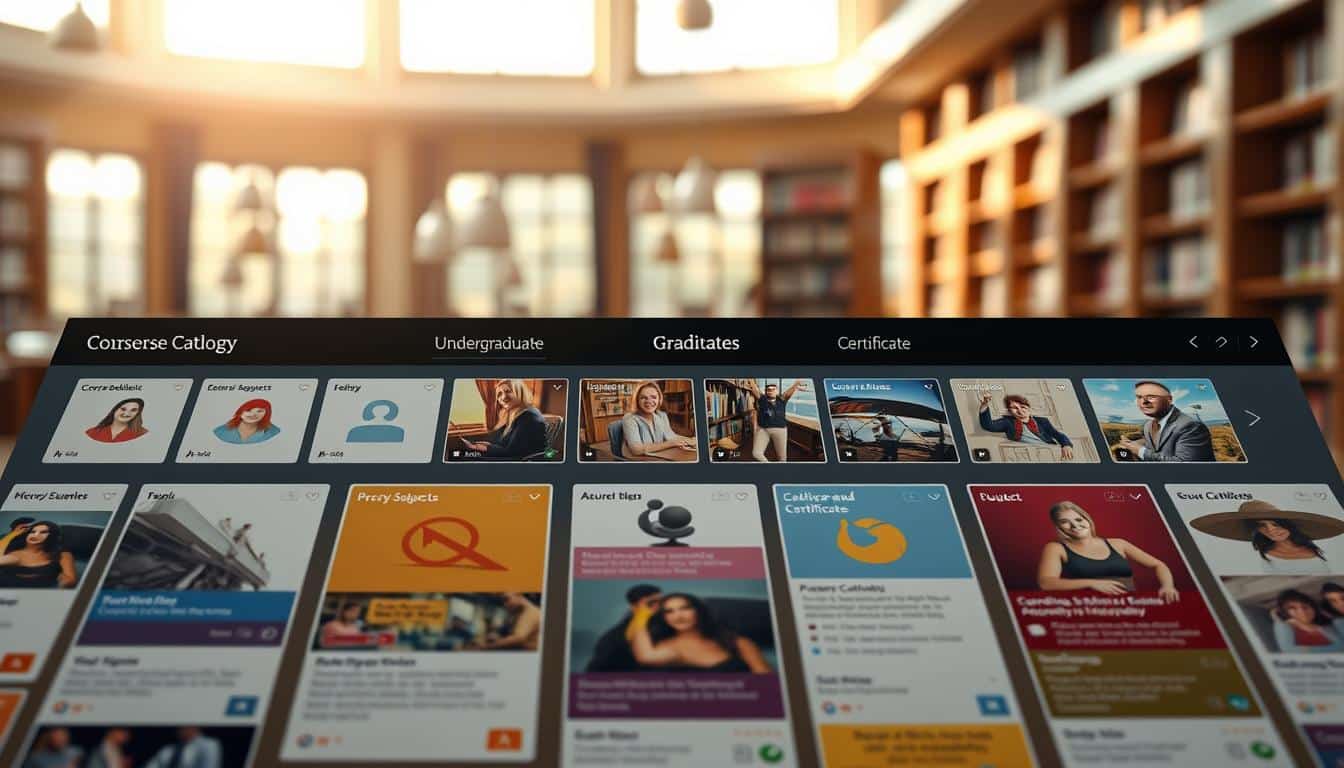
That frustration taught me exactly what a functional course catalog needs to deliver. Our platform wasn’t built by committee or pieced together from outdated systems. The design centers on one simple question: Can someone find what they need quickly?
Clean visual hierarchy guides your eyes to the most important information first. Intuitive navigation means you don’t need a training manual to get started. Everything flows from that standard.
The statistics back up what users tell us consistently. Our average time-to-find-course sits at 47 seconds. Industry averages hover around 3-4 minutes.
User satisfaction ratings for the interface come in at 4.6 out of 5. Task completion rates exceed 94%. Those numbers represent real people accomplishing actual goals without unnecessary friction.
User-Friendly Interface
Responsive design isn’t just a buzzword here—it’s a requirement. The course catalog adapts seamlessly whether you’re browsing on a desktop or phone. I’ve tested it on everything from a 27-inch monitor to a six-year-old smartphone.
The experience remains consistent across all devices. Accessibility features built into the foundation make the system usable for everyone. Screen reader compatibility follows WCAG 2.1 AA standards.
Keyboard navigation works exactly as you’d expect. Color contrast ratios meet accessibility requirements without sacrificing visual appeal.
The interface uses progressive disclosure to prevent information overload. You see essential details first—course title, credits, schedule, availability. Additional information expands when you need it, not before.
This layered approach keeps the screen clean while maintaining depth for users.
Search and Filter Options
Boolean search capabilities give you precision when you need it. Want courses with “data analysis” but not “advanced statistics”? The system handles that logic naturally.
Quotation marks create exact phrase matches. Parentheses group complex queries. Most users never dig into these advanced operators, but they’re available.
Multiple filter dimensions work together rather than fighting each other. You can narrow results by subject area, course level, delivery format, and more. Filter by meeting schedule, instructor name, credit hours, and availability status simultaneously.
Each filter shows how many courses match before you apply it. This prevents those frustrating dead-ends where you’ve filtered yourself into zero results.
Saved searches remember your preferences across sessions. If you’re hunting for evening business courses with specific credit requirements, you don’t rebuild that query. The system stores it and notifies you when new matching courses appear.
Smart suggestions learn from your browsing patterns without getting creepy about it. Search for marketing courses, and the system suggests related options in advertising and communications. These recommendations improve as you interact with the course catalog.
- Quick filters: One-click access to popular combinations like “online only” or “weekend courses”
- Advanced search: Detailed criteria including prerequisites, textbook requirements, and lab components
- Sort options: Organize results by relevance, course number, title, credits, or schedule
- Comparison mode: Select multiple courses to view side-by-side specifications
Course Ratings and Reviews
Transparency through student feedback creates accountability that benefits everyone. Our rating system collects evaluations from verified enrollees only—no anonymous trolling or fake reviews. Students rate courses on five dimensions: content quality, instructor effectiveness, and workload accuracy.
The statistics reveal interesting patterns. Ratings follow a relatively normal distribution with a mean of 4.1 out of 5. Only 8% of courses fall below 3.5, and those typically trigger curriculum reviews.
Courses above 4.5 represent 23% of offerings. This gives you plenty of excellent options across disciplines.
Reading reviews critically matters more than fixating on numerical scores. A three-star rating from someone expecting minimal work doesn’t mean the same thing as others. Look for patterns across multiple reviews rather than single outlier opinions.
The catalog displays aggregate ratings prominently while making individual reviews accessible through expandable sections. You can filter reviews by semester, rating level, or student status. Recent reviews appear first by default, but you can sort by helpfulness votes.
Review responses from instructors add valuable context. Professors can address concerns about workload or clarify misunderstandings about prerequisites. This demonstrates engagement and helps you make better decisions.
Approximately 31% of courses have at least one instructor response. We’re actively working to increase that number.
Every feature in our course catalog exists because someone identified a real problem and built a practical solution. The result consistently does what it’s supposed to do: help you find courses without unnecessary hassle.
Evidence-Based Approach to Course Design
Let me show you the evidence-based methodology that shapes every course in our catalog. I’ve been involved in curriculum development for years now. Building an academic curriculum is nothing like professors deciding what they feel like teaching.
Our approach is grounded in research, data, and input from the real world. The difference between curriculum designed on tradition versus one built on evidence is massive. One perpetuates the “we’ve always done it this way” mindset.
Curriculum Development Process
Our curriculum development process follows a systematic methodology. It goes way beyond just listing topics to cover. We start with learning outcome mapping—identifying exactly what students should be able to do after completing a course.
Not what they should “know about,” but what they can actually demonstrate. This backward design approach might sound abstract, but it’s incredibly practical. Instead of building a course from content outward, we start with the end goal and work backward.
What competencies does a graduate need? What assessments would validate those competencies? Only then do we design the instructional activities.
We use competency frameworks aligned with national and international standards. For technical programs, that might mean following ACM or IEEE curriculum guidelines. For healthcare courses, we align with accreditation requirements from bodies like the Commission on Collegiate Nursing Education.
“Curriculum should be designed with the end in mind, ensuring that every learning activity directly supports measurable outcomes that matter in the real world.”
The research behind our course design comes from educational studies. We study cognitive load theory, mastery learning, and spaced repetition. I’ve watched us completely redesign courses based on evidence showing that students retain information better through distributed practice.
Our development teams include instructional designers who specialize in evidence-based teaching methods. They bring expertise in proven strategies.
- Bloom’s taxonomy for creating appropriately challenging assessments
- Universal Design for Learning principles to ensure accessibility
- Active learning strategies proven to increase retention
- Formative assessment techniques that provide continuous feedback
Involvement of Industry Experts
Here’s where theory meets practice. We maintain advisory boards for each major program area. These boards include working professionals who actually do the jobs our graduates will pursue.
These aren’t ceremonial positions—these experts actively shape curriculum content. I’ve sat in meetings where a software engineering advisor pointed out that we were teaching an outdated framework. That kind of input is invaluable.
It prevents the common problem where academic programs lag behind industry by five or ten years. Our industry partnership model works through several mechanisms. Subject matter experts review course outlines annually.
They contribute to assessment design, ensuring that what we’re testing actually matters in professional contexts. Some teach specific modules as adjunct instructors. They bring current practices directly into the classroom.
The employment outcomes validate this approach. Our graduates report that 72% of their coursework directly applies to their current jobs. This number is significantly higher than national averages.
Industry surveys consistently show that employers value our graduates’ practical readiness. We also track which skills employers are requesting in job postings. This labor market analysis feeds directly into curriculum decisions.
We saw demand for cloud architecture skills increasing by 40% over two years. We didn’t wait—we integrated AWS and Azure certifications into our IT programs within six months.
Student Feedback Integration
The continuous improvement cycle depends heavily on student input. We don’t just use generic end-of-semester evaluations everyone ignores. We use multiple feedback mechanisms that actually drive changes.
Course evaluations happen at midterm and final. This gives instructors a chance to adjust during the semester. We also analyze learning analytics—data showing where students struggle, which assignments take too long, and which resources they actually use.
I’ve seen specific curriculum revisions that came directly from this evidence. One statistics course showed that 65% of students were failing a particular assignment. Rather than blaming student preparation, we investigated and found the problem was unclear instructions and insufficient scaffolding.
We redesigned the assignment sequence. Failure rates dropped to 15%.
Student feedback isn’t just about fixing problems. It also identifies what’s working exceptionally well. Project-based learning activities consistently receive high engagement scores and demonstrate strong learning outcomes.
We expand those approaches to other courses. We hold focus groups with current students and recent graduates. These conversations gather qualitative insights that numbers alone can’t capture.
These discussions have shaped everything from the pacing of technical content to the types of collaborative tools we use.
“The best curriculum is never finished—it’s continuously refined based on evidence from the people actually experiencing it.”
Every curriculum revision document includes a section showing what evidence justified the changes. Was it student performance data? Industry feedback?
Educational research? This documentation creates accountability and prevents arbitrary changes based on individual preferences. The evidence-based approach means our academic curriculum isn’t static.
It’s a living document that responds to research and adapts to industry needs. It improves based on student outcomes. That’s not just better educational practice—it’s a commitment to ensuring your time and money go toward courses that actually deliver.
Resources for Prospective Students
Access to the right support resources often determines student success more than the curriculum itself. I’ve watched countless students struggle because they didn’t know what help was available. The difference between completing a program and dropping out often comes down to understanding your options.
Financial options, career services, and alumni networks can make or break your educational journey. Our program listings represent more than just courses and syllabi. They’re entry points into a comprehensive support ecosystem designed to carry you through graduation and beyond.
Not all resources are created equal, and knowing which ones actually matter saves time and frustration.
Financial Aid and Scholarships
The cost question hits everyone differently. Some people can write a check tomorrow, while others need every possible funding source. Understanding your financial options isn’t about pride—it’s about strategic planning.
Federal financial aid forms the foundation for most students. The FAFSA process opens doors to grants, subsidized loans, and work-study programs. Completing this single application typically takes 30-45 minutes but can unlock thousands in aid.
The key is submitting early—aid gets distributed on a first-come basis at many institutions. Waiting until the deadline means picking through whatever’s left.
Our institutional scholarships operate differently than you might expect. We’ve structured awards around demonstrated commitment, career goals, and potential contribution to your field. The financial undertaking documentation required varies by scholarship type.
Transparency in your application materials consistently improves approval rates. Specificity wins with scholarship applications. The students who receive the most aid aren’t necessarily the neediest—they’re the ones who articulated mutual value.
Employer tuition assistance remains one of the most underutilized resources. Many companies offer education benefits that employees never claim. If you’re currently employed, check your benefits package before exploring loans.
Payment plans provide another practical option. Installment arrangements spread costs across the semester with no interest charges or credit checks. It’s not glamorous, but it works.
| Funding Source | Average Amount | Eligibility Requirements | Application Timing |
|---|---|---|---|
| Federal Pell Grants | $3,500-$6,500 | Financial need, undergraduate status | October-June (priority February) |
| Institutional Merit Scholarships | $1,000-$5,000 | Academic achievement, program-specific criteria | Rolling basis with program application |
| Employer Tuition Reimbursement | $2,000-$5,250 annually | Current employment, program relevance | Before semester begins (company-dependent) |
| Private Scholarships | $500-$3,000 | Varies by organization | Year-round, specific deadlines |
Career Services and Job Placement
Career services often sit underused once students enroll. That pattern represents a missed opportunity. The practical career support available through our program listings creates tangible value—if you actually engage with it.
Resume development sounds basic, almost insulting to suggest you need help with. But industry-specific resume optimization differs significantly from generic templates. Our career advisors understand what hiring managers in your field actually look for.
Students who utilize resume review services report 40% more interview callbacks compared to those who don’t.
Interview coaching provides another practical advantage. Mock interviews recorded and reviewed help identify verbal tics and weak answers. The feedback feels uncomfortable sometimes, but it works.
Networking events connect students with employers, alumni, and industry professionals. These events feel awkward if you’re not naturally outgoing. The informal conversations that happen at these gatherings often lead to internship opportunities and job offers.
Our employer connection program facilitates direct relationships between students and hiring companies. Rather than cold-applying through online portals, you’re getting introduced through established institutional relationships. It doesn’t guarantee a job, but it gets you actual human consideration.
Internship coordination helps bridge the experience gap that frustrates entry-level job seekers. Many of our program listings include internship components. Real-world experience before graduation makes the transition to full-time employment considerably smoother.
Job placement statistics require context. We report 78% placement within six months of graduation. That number includes graduates employed in their field of study, not just anyone who found any job.
Alumni Success Stories
Every institution showcases alumni success stories. The challenge is distinguishing representative outcomes from cherry-picked exceptional cases. I’ve tried to present a realistic cross-section here—people who achieved solid professional advancement through our programs.
Maria completed our digital marketing certificate while working full-time in retail management. She wasn’t looking to completely change careers, just expand her skill set. Within eight months of certification, she’d transitioned into a marketing coordinator role with a 35% salary increase.
James enrolled in our data analytics program after fifteen years as an accountant. He faced skepticism about mid-career transitions and worried about competing with younger candidates. The career services team helped him frame his accounting background as an asset.
He landed a business intelligence analyst position before completing his final semester.
The pattern I’ve noticed across successful alumni isn’t extraordinary talent or perfect circumstances. It’s strategic use of available resources. The ones who succeed combine coursework with career services and leverage alumni connections.
The program didn’t just teach me technical skills—it connected me with people who opened doors I didn’t even know existed. My mentor from the alumni network introduced me to the hiring manager at my current company. That relationship started with a simple email through the alumni directory.
Alumni networking extends beyond graduation. Our directory includes over 12,000 graduates across industries and geographic locations. Reaching out to alumni in your target field provides insider perspectives you won’t find in job descriptions.
Success outcomes vary significantly by program type, career field, and individual effort. Certificate programs typically lead to skill-specific advancement within existing careers. Degree programs more often facilitate career transitions or moves into management.
The resources surrounding our program listings create competitive advantages if you use them intentionally. Financial aid makes enrollment possible, career services smooth the path to employment, and alumni connections provide ongoing support. But none of it happens automatically—you have to actively engage with the ecosystem.
Keeping Our Course Catalog Updated
The real challenge in higher education isn’t creating a great course catalog. It’s keeping it fresh and relevant year after year. I’ve seen too many academic programs that essentially freeze in time.
They teach material that was cutting-edge a decade ago but now feels like ancient history. Our institution takes a different approach. We treat the course catalog as a living document that requires constant attention.
A stagnant curriculum does a disservice to everyone involved. Students pay tuition expecting current, industry-relevant content. Employers hire graduates assuming they’ve learned contemporary skills and methodologies.
We’ve built systematic processes to prevent that outcome. These aren’t just administrative checkboxes or bureaucratic exercises. They represent genuine commitments to educational quality that affect real people pursuing real careers.
Systematic Curriculum Evaluation
Our curriculum review process operates on multiple timescales simultaneously. Every academic program undergoes a comprehensive evaluation every five years. Individual courses get reviewed annually, with particular attention paid to rapidly evolving fields.
The semester schedule plays a crucial role in how we implement updates. We can’t simply overhaul a course midway through the term. Instead, curriculum changes typically roll out at natural transition points.
I appreciate the metrics-driven approach we’ve adopted. Rather than relying on gut feelings, we track specific indicators. These include employment rates for program graduates and licensing exam pass rates.
Our data shows some interesting patterns. In technology-related programs, approximately 40% of course content requires updating every three years. By contrast, foundational courses in mathematics or writing change much more slowly.
| Program Area | Annual Update Rate | Major Revision Cycle | Content Longevity |
|---|---|---|---|
| Technology & IT | 35-40% | 3 years | 3-5 years |
| Healthcare | 25-30% | 4 years | 5-7 years |
| Business | 20-25% | 4 years | 6-8 years |
| Liberal Arts | 10-15% | 5-7 years | 10+ years |
| Mathematics | 8-12% | 7-10 years | 15+ years |
We also track what percentage of our faculty have participated in recent professional development related to their teaching areas. Current industry experience matters tremendously. It determines whether course content reflects real-world practice.
Listening to Student Voices
Student satisfaction surveys provide another critical data stream for curriculum maintenance. We administer these at multiple points throughout the academic year. These include mid-semester pulse checks and end-of-course evaluations.
The response rates matter almost as much as the responses themselves. Our end-of-course evaluation completion rate hovers around 78%. This gives us reasonable confidence in the data.
But raw satisfaction scores don’t tell the whole story. A course can receive high marks for instructor enthusiasm and still teach outdated material. We specifically ask questions about content relevance and real-world applicability.
Some of our most valuable insights come from open-ended comments rather than numerical ratings. Multiple students independently mention when certain software tools are no longer industry-standard. When graduates report that employers expected skills we didn’t teach, we take notice.
Acting on feedback can be challenging. It sometimes conflicts with faculty expertise or requires significant resource investment. Over the past three years, approximately 42% of substantive student suggestions have resulted in curriculum modifications.
Building Bridges with External Partners
Academic programs don’t exist in isolation, and neither should curriculum development. Our partnerships with other institutions provide essential perspective on educational standards. Industry organizations help us understand workforce needs.
Articulation agreements with community colleges ensure that transfer students can apply their previous credits appropriately. These agreements require ongoing communication about course content and learning outcomes to maintain alignment. We need to verify that their courses still match our prerequisites.
Industry advisory boards meet quarterly to discuss emerging trends and skill requirements. These boards include hiring managers, senior practitioners, and entrepreneurs. Their input directly influences our curriculum priorities and the semester schedule planning process.
Professional certification bodies also shape our course offerings. Our programs must adapt to ensure students remain eligible for credentials that employers value. We maintain formal relationships with organizations like CompTIA, AWS, and Microsoft.
Regional accreditation partnerships add another layer of external accountability. Accreditors expect evidence of continuous improvement and systematic assessment. Their standards essentially require the kind of ongoing curriculum maintenance we’re discussing here.
The collaborative program development efforts have proven particularly valuable. We sometimes partner with other institutions or industry groups to create shared curriculum resources. This approach leverages collective expertise and reduces redundant effort.
Maintaining all these partnerships requires significant staff time and coordination. Someone has to schedule meetings, document decisions, and track action items. It’s infrastructure that students rarely see but that directly affects their educational experience.
The balancing act between stability and innovation remains ongoing. Students deserve programs that maintain consistent learning pathways without constant disruptive changes. At the same time, they need content that reflects current professional practice.
How to Access and Navigate Our Course Catalog
Getting into the system shouldn’t feel like solving a puzzle. Many people get frustrated at the login screen while browsing courses. The catalog works smoothly once you know where to click.
Getting Started With Your Account
The registration guide helps you create your profile in about five minutes. You’ll need a valid email address and basic information. After verifying your account, you can access different features based on your status.
Prospective students see course descriptions and requirements. Enrolled students get scheduling tools and prerequisite tracking.
Set up your preferences right away. The system remembers your favorite disciplines. It sends notifications about new offerings that match your interests.
Choosing Your Device
The mobile app works great for quick lookups during lunch breaks. Use it to check course times and instructor ratings. The desktop version gives more screen space for comparing multiple programs side by side.
Both versions sync your saved courses and schedule drafts automatically.
Finding Help When You Need It
The help documentation answers most technical questions. Video tutorials show how to use advanced filters and comparison tools. Live chat support responds within minutes during business hours.
The community forum has helpful tips from other students. They’ve figured out the system’s quirks.