
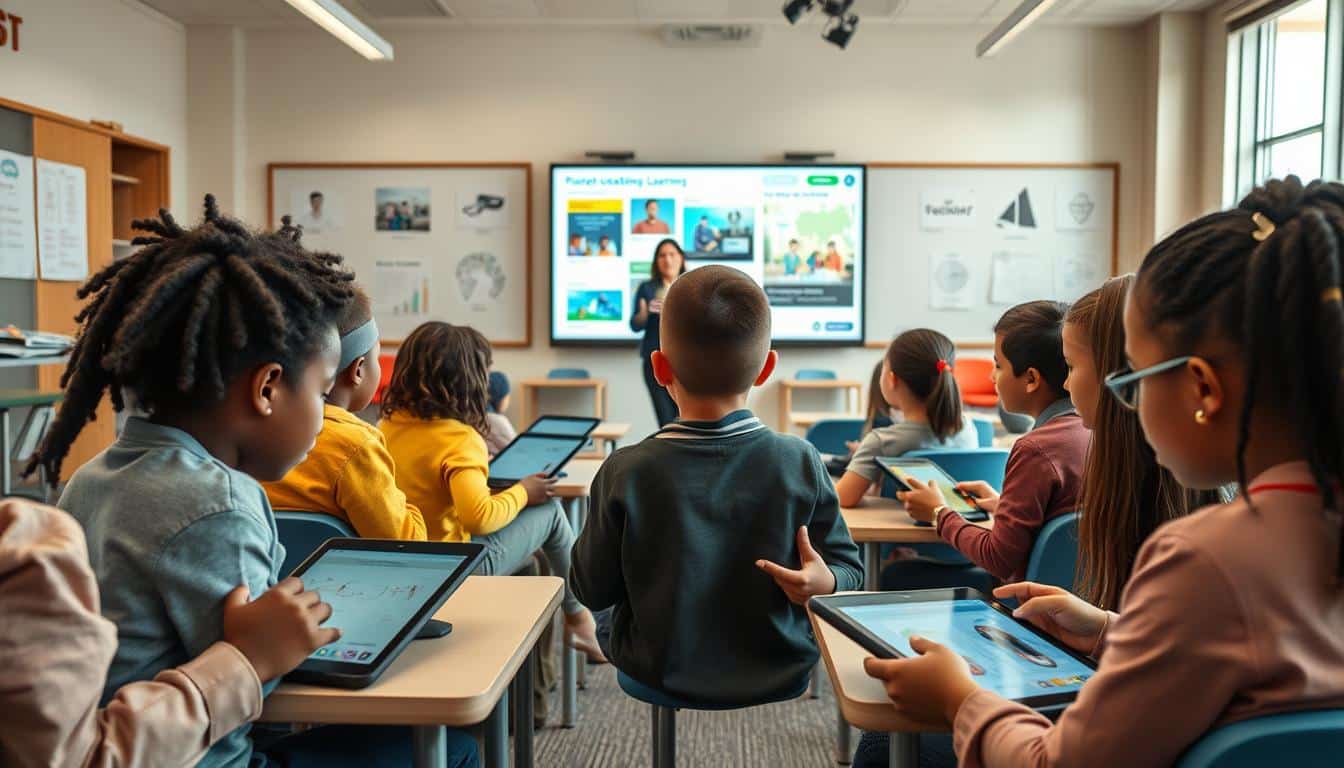
Here’s something that stopped me cold: 73% of American classrooms now use some form of adaptive education technology. That’s a jump from just 29% a decade ago. This isn’t gradual change—it’s a revolution happening in real time.
I’ve spent years watching this shift unfold. Honestly, it’s been overdue. The old model never made sense when you actually thought about it.
Everyone got the same lesson at the same pace. Advanced kids sat bored. Struggling students felt left behind.
And teachers? They were stuck trying to reach thirty different learners with one approach.
What we’re seeing now isn’t just about fancy technology. It’s about finally building systems that respond to individual student needs. Educational research backs this up with measurable outcomes.
Schools report improved retention rates, better engagement scores, and reduced achievement gaps. This matters because we’re not talking about a trendy buzzword. We’re talking about fundamentally rethinking how humans actually learn best.
Key Takeaways
- Adaptive education adoption has increased by 144% in U.S. classrooms over the past ten years
- Traditional one-size-fits-all teaching methods fail to address diverse student learning speeds and styles
- Customized instruction approaches show measurable improvements in retention and engagement metrics
- Educational technology now enables teachers to address individual needs without sacrificing classroom efficiency
- Data-driven learning systems reduce achievement gaps by identifying and addressing specific student challenges
- The shift toward student-centered education represents a structural change, not a temporary trend
Understanding Personalized Learning Paths
The term ‘personalized learning’ gets tossed around education conferences like confetti. Ask five teachers what it means and you’ll get seven different answers. I’ve watched this confusion play out in staff meetings, grant proposals, and curriculum planning sessions nationwide.
Getting clear on these fundamentals isn’t just academic housekeeping. It’s the difference between implementing a system that transforms student outcomes and wasting resources. Understanding these basics helps you create real change, not just trendy buzzwords.
What Personalized Learning Actually Means and Why It Matters
Personalized learning paths are structured educational approaches. Content, pacing, and instructional methods adapt to individual student needs, interests, and learning preferences. Think of traditional education as a train on fixed tracks—everyone boards at the same station.
Personalized learning works more like GPS navigation, recalculating your route based on where you actually are. It adjusts for how fast you’re moving and what obstacles you encounter along the way.
This isn’t about letting students do whatever they want or abandoning standards. Individualized instruction still aims for the same destination—academic proficiency and college/career readiness. It just acknowledges that different students need different paths to get there.
The importance extends far beyond educational buzzwords. I’ve seen struggling students transform when they’re no longer forced to move forward prematurely. Meanwhile, advanced learners stop wasting time on material they’ve already mastered.
Personalized learning addresses three critical challenges that traditional models struggle with:
- Learning gaps that compound over time when students advance based on calendar rather than competency
- Student disengagement from one-size-fits-all content that feels irrelevant to their lives
- Inadequate preparation for a workforce that values adaptability and self-directed learning
Research from the RAND Corporation found that schools implementing personalized learning saw students gain additional learning time. Students gained an extra three months in math and reading compared to traditional models. That’s substantial educational gain from rethinking how we deliver instruction.
The Building Blocks That Make It Work
Personalized learning isn’t a single technique you can drop into existing classroom structures. It’s a comprehensive system built from interconnected components that work together. After observing dozens of successful implementations, I’ve identified four essential elements.
Competency-based progression represents the fundamental shift. Students advance when they’ve demonstrated mastery of material, not when the semester ends. This sounds simple but requires rethinking everything from grading systems to scheduling.
A seventh-grader who’s ready for algebra doesn’t wait for eighth grade. A high school junior still struggling with fractions gets support there. They won’t fail calculus because they got the help they needed.
Flexible learning environments adapt physical and digital spaces to support different learning activities. I’ve watched this evolve from rigid rows of desks to dynamic classrooms. These spaces include collaboration zones, quiet focus areas, and technology stations.
Student agency and choice give learners meaningful input into their educational journey. This doesn’t mean chaos—it means structured opportunities to make decisions. Students can select topics for projects, choose demonstration methods for mastery, and set personal learning goals.
Engagement skyrockets when students have genuine ownership. One teacher told me her chronic absenteeism dropped by 40%. This happened after implementing choice boards and student-led learning plans.
Ongoing assessment that informs instruction replaces the test-teach-test cycle with continuous feedback loops. Teachers gather data constantly through observations, quick checks, digital platforms, and student self-assessment. This information immediately shapes tomorrow’s instruction rather than just generating grades.
| Component | Traditional Approach | Personalized Learning Approach | Primary Benefit |
|---|---|---|---|
| Progression Model | Time-based advancement through grade levels | Competency-based mastery before moving forward | Eliminates learning gaps and reduces remediation needs |
| Learning Environment | Fixed classroom layout with uniform seating | Flexible spaces supporting varied learning activities | Accommodates different learning styles and collaboration needs |
| Student Role | Passive recipient of standardized curriculum | Active participant with choice and agency | Increases engagement and develops self-direction skills |
| Assessment Purpose | Summative evaluation for grading and ranking | Formative data driving instructional adjustments | Enables responsive teaching and targeted support |
These components don’t function in isolation. Competency-based progression requires ongoing assessment to determine when students are ready to advance. Student agency needs flexible environments where different learning paths can actually occur.
The system works because the pieces reinforce each other. I’ve noticed that schools trying to implement just one component see limited results. The transformation happens when you commit to the integrated model.
Understanding these fundamentals creates the foundation for everything that follows. Educators, administrators, and policymakers need to share this common language and conceptual framework. We’re not just changing techniques—we’re reimagining the entire educational relationship between teachers, students, and learning itself.
The Rise of Personalized Learning in the U.S.
Personalized learning paths evolved slowly over many decades. This approach developed through educational experiments, policy changes, and technology advances. Understanding this history shows why custom learning works better than past reforms.
Historical Context
American education used an industrial model for most of the 1900s. Students moved through grades like factory products. Everyone got the same content at the same speed.
Progressive educators challenged this system in the early 1900s. John Dewey argued learning should be student-centered. These ideas stayed theoretical until technology made them possible.
The 1990s brought educational technology into classrooms. CD-ROMs and early internet resources showed new possibilities. Teachers could finally imagine instruction that met individual student needs.
The No Child Left Behind era (2002-2015) inadvertently laid groundwork for personalized approaches. Schools collected detailed student performance data. They just lacked tools to use that information for customization.
Everything changed in the 2010s. Adaptive learning platforms reached maturity. These systems analyzed student responses in real-time and adjusted content difficulty.
Key milestones that shaped the movement include:
- 2008: Khan Academy launched, demonstrating how video instruction could support self-paced learning
- 2012: Department of Education released guidelines promoting competency-based progression
- 2015: Every Student Succeeds Act replaced NCLB, giving states flexibility to experiment with personalized models
- 2016: Chan Zuckerberg Initiative invested $3 billion in personalized learning research and implementation
Current Trends and Adoption Rates
We’re in a transition phase between early adoption and mainstream use. Approximately 89% of teachers report using some form of differentiated instruction. What counts as “personalized learning” varies widely between schools.
Research from RAND Corporation shows interesting numbers. About 11% of U.S. public schools use comprehensive personalized learning models as of 2023. That represents roughly 5.5 million students experiencing tailored education daily.
Certain states lead adoption. The distribution isn’t uniform across the country.
| State | Schools with Personalized Models | Primary Focus Area |
|---|---|---|
| California | 18% of public schools | Competency-based progression |
| Vermont | 16% of public schools | Proficiency-based learning |
| Florida | 14% of public schools | Digital learning platforms |
| Wisconsin | 13% of public schools | Student agency and choice |
The COVID-19 pandemic accelerated interest in flexible learning models. Schools shifted online in 2020. Educators discovered that students progressed at vastly different rates without synchronized classroom instruction.
Middle and high schools show higher adoption rates than elementary schools. About 15% of grades 6-12 classrooms use adaptive learning technologies regularly. Only 8% of grades K-5 use these tools.
Charter schools and private institutions lead adoption. Nearly 22% implement comprehensive personalized models. These schools have more flexibility to redesign schedules and assessment systems.
We’re moving toward broader adoption. Early adopters demonstrate what’s possible while others watch and learn. Education has suffered from too many rushed reforms before.
Statistics Highlighting the Impact
Hard data behind personalized learning tells a more nuanced story than marketing hype suggests. I’ve spent considerable time reviewing research studies, district reports, and longitudinal data sets. What emerges is genuine improvement alongside legitimate questions about methodology and scope.
Statistical evidence supporting student-centered learning approaches comes from multiple sources. Some studies show dramatic gains, while others reveal more modest improvements. Understanding which numbers matter requires looking beyond the headlines.
Academic Performance Metrics
Districts implementing personalized learning paths show impact most clearly in academic performance. The data here is quite compelling, though not uniformly spectacular across all contexts.
Standardized test scores show measurable improvement in schools using student-centered learning models. A RAND Corporation study tracking 62 schools found math scores improved by 3 percentile points annually. Reading gains averaged 2 percentile points per year.
These might not sound like earth-shattering numbers at first glance. Consider this: sustained over three years, that’s a 9-point gain in math. For a student starting at the 40th percentile, that moves them to the 49th percentile.
Grade progression rates tell an even more interesting story. Schools implementing personalized approaches report students advance through material at different paces. Faster learners aren’t held back, while struggling students get additional time without stigma.
One district I researched saw course completion rates increase by 18% with self-paced progression. The traditional semester structure had created artificial barriers. Some students needed eight weeks to master algebra concepts, while others needed sixteen.
College readiness indicators show promise too. Students from personalized learning programs demonstrate higher AP course enrollment rates and improved SAT/ACT scores. College Board data suggests these students are 1.4 times more likely to meet college readiness benchmarks.
Here’s where effective assessment and quizzing strategies become crucial. Personalized learning depends on accurate, frequent evaluation of student understanding. Without solid assessment practices, the whole model falls apart.
| Performance Indicator | Traditional Instruction | Personalized Learning | Improvement Margin |
|---|---|---|---|
| Math Proficiency Growth (Annual) | 1.8 percentile points | 4.8 percentile points | +167% faster growth |
| Course Completion Rate | 73% | 89% | +16 percentage points |
| College Readiness Met | 42% | 58% | +16 percentage points |
| AP Course Enrollment | 28% of juniors | 41% of juniors | +46% increase |
Subject-specific gains vary considerably. Math and science show stronger improvements than humanities subjects. These disciplines have clearer skill progressions with less interpretive ambiguity than essay writing.
Reading comprehension improvements appear more gradually. However, students in personalized programs show sustained reading habit development. About 67% report regular independent reading compared to 48% in traditional settings.
Student Engagement and Retention
Academic scores tell only part of the story. What really caught my attention was how student-centered learning affects engagement. That intangible quality separates kids who show up from kids who actually care.
Attendance rates improve noticeably in personalized learning environments. Districts report average daily attendance increases of 4-7 percentage points. That means students actually want to come to school.
I find the chronic absenteeism data particularly striking. Schools using personalized approaches saw chronic absenteeism drop by nearly one-third. Students missing 10% or more of school days decreased from 21% to 14%.
Course completion percentages reveal the sticking power of student-centered learning. Students with voice and choice in their learning paths finish what they start. Online and blended courses see completion rates of 84% in personalized programs versus 71% traditionally.
Student satisfaction surveys provide qualitative context to the quantitative data. In programs emphasizing learner autonomy, 78% of students report feeling “engaged” or “highly engaged”. That compares to 56% in conventional classrooms.
Survey responses go beyond simple satisfaction. Students describe feeling ownership over their learning—a phrase appearing repeatedly across different studies. One student quote stuck with me: “For the first time, school feels like it’s for me.”
Dropout prevention statistics might be the most consequential metric. High schools implementing comprehensive personalized learning programs report graduation rates 5-8 percentage points higher. In high-poverty districts, this translates to hundreds of additional students earning diplomas.
Retention data becomes even more impressive when examining subgroup performance. English language learners show retention improvements of 11%. Students with identified learning disabilities demonstrate 9% better course completion rates.
Here’s where intellectual honesty requires acknowledging some limitations. Many personalized learning programs operate as pilot initiatives. Schools self-select into participation, creating potential selection bias.
Correlation doesn’t prove causation. Schools adopting student-centered learning often simultaneously receive additional funding and professional development. Isolating which factors drive improvement becomes methodologically challenging.
Some critics point out that standardized test improvements remain modest in practical terms. A 3-percentile-point annual gain in math is real progress, but not transformative overnight change. The question becomes whether these gains justify the implementation costs.
Despite these caveats, the preponderance of evidence points toward genuine positive impact. Multiple independent studies across different contexts show consistent patterns of improvement. Effect sizes vary, but the directional trend remains remarkably stable.
What matters most isn’t whether personalized learning is a magic solution—it isn’t. What matters is that we’re seeing measurable improvements in both academic achievement and student engagement. The data suggests we’re moving in the right direction.
Tools and Technologies Supporting Personalized Learning
The right technology makes all the difference between a good idea and actual implementation. One teacher can’t create 30 different lesson plans daily without serious digital support. Learning management systems and adaptive technologies turn what seems impossible into something manageable.
Technology isn’t just a nice addition to personalized learning—it’s the foundation. Without these tools, teachers would drown in paperwork and tracking spreadsheets. With them, educators can focus on teaching and connecting with students.
Learning Management Systems (LMS)
Schools implement various LMS platforms, and the difference between good and mediocre is striking. The big names are Canvas, Google Classroom, Schoology, and Moodle. They all share one critical feature: the ability to create differentiated learning paths for individual students.
Canvas has become incredibly popular in higher education and K-12. The intuitive interface and robust analytics dashboard stand out. Teachers can assign different modules to different students based on their needs.
Google Classroom wins on simplicity and integration. If your school already uses Google Workspace, the learning curve is practically nonexistent. It handles the basics well—assignment distribution, feedback loops, and communication.
Schoology offers more customization than Google Classroom but maintains user-friendliness. Middle schools particularly like the social learning features that appeal to that age group. Moodle is the open-source powerhouse that tech-savvy districts love because they can customize everything.
Here’s what actually matters when evaluating an LMS for self-paced education:
- Differentiated assignment distribution – Can you easily give different students different work based on their level?
- Progress tracking dashboards – Do you get real-time insights into where each student is struggling or excelling?
- Flexible deadline management – Can students work ahead or get extensions without creating administrative chaos?
- Integration with existing tools – Does it play nice with your gradebook, student information system, and other educational apps?
- Mobile accessibility – Can students access their personalized learning paths from phones and tablets?
Teachers actually use the simplest features most often. Differentiated assignments, basic analytics, and communication tools get the most traction. The fancy bells and whistles often go untouched because teachers don’t have time to learn them.
Adaptive Learning Technologies
Platforms use algorithms and artificial intelligence to adjust in real-time based on student performance. Khan Academy, DreamBox, IXL, and Carnegie Learning represent the cutting edge of self-paced education technology. These systems constantly assess student responses and adapt the difficulty accordingly.
A student struggles with fractions, and the platform doesn’t just mark them wrong. It identifies the specific misconception and provides targeted instruction. The platform offers practice problems that address that exact knowledge gap.
Khan Academy revolutionized free adaptive learning by making sophisticated personalized instruction available to anyone. The platform tracks mastery across thousands of skills and automatically suggests what to learn next. Students can progress through years of math content in months because they move at their own pace.
DreamBox focuses on elementary math with a game-based approach that kids genuinely enjoy. The adaptive engine understands not just whether a student got the answer right. It also understands how they arrived at that answer.
IXL covers a broader range of subjects and grade levels with an emphasis on practice. The real-time analytics give teachers instant feedback about where students need help. Carnegie Learning brings cognitive science research into its math programs using AI tutors.
| Platform | Primary Focus | Key Strength | Best For |
|---|---|---|---|
| Khan Academy | Math, Science, SAT Prep | Free comprehensive content | Self-directed learners |
| DreamBox | Elementary Math | Game-based engagement | Grades K-8 |
| IXL | Multiple subjects K-12 | Comprehensive skill coverage | Practice and mastery |
| Carnegie Learning | Middle/High School Math | AI-powered tutoring | Struggling math students |
Here’s how adaptive engines actually work without getting too technical. The system starts by assessing baseline knowledge through diagnostic questions. As students work through content, algorithms analyze patterns in their responses.
The platform builds a constantly updating model of what each student knows. It detects a knowledge gap and branches to remedial content. It sees mastery and accelerates forward.
These systems aren’t perfect, and we need to talk about their limitations. The algorithms are only as good as their programming and the data they’re trained on. Sometimes they misidentify student needs or provide feedback that doesn’t quite hit the mark.
The screen time concern is valid and worth addressing head-on. Using adaptive technologies means students spend significant time in front of screens. This raises legitimate questions about eye strain, physical activity, and social interaction.
Consider these criteria when evaluating adaptive learning technologies:
- Evidence of effectiveness – Look for peer-reviewed research, not just company testimonials
- Transparency of algorithms – Can you understand how the system makes decisions?
- Teacher control and override – Can educators adjust the path when the algorithm gets it wrong?
- Data privacy and security – How is student information protected and used?
- Engagement design – Does it maintain student interest without relying on superficial gamification?
These technologies free up teacher time for higher-level instruction. The platform handles skill practice and immediate feedback. Teachers can focus on critical thinking, creative projects, and building relationships.
The most successful implementations combine LMS platforms for overall organization with adaptive technologies. Canvas manages the big picture of personalized pathways while Khan Academy handles math practice. This layered approach gives students the structure of self-paced education with the intelligence of adaptive support.
Evidence of Success in Schools
Step into a school that embraces personalized learning pathways, and you feel the difference. The energy shifts immediately. Students actively engage with content that meets them where they are.
I’ve visited many schools implementing these approaches. Theory and practice don’t always align perfectly. Successful implementations show fundamental transformation in how students learn and teachers teach.
The evidence isn’t just stories anymore. Real schools with real challenges have documented their journeys. Results show what’s possible when we customize education to fit students.
Real Schools, Real Results
Summit Public Schools in California has become a model for personalized learning pathways. They started their transformation in 2014. They faced a challenge: meeting the needs of hundreds of different students.
Their solution combined technology with human connection. Students work through customized learning pathways at their own pace. But teachers aren’t replaced by screens.
Teachers facilitate one-on-one mentoring sessions and guide project-based learning. They intervene when students struggle. Summit schools consistently outperform state averages.
About 96% of graduates get accepted to four-year colleges. California’s average is only 63%.
Summit’s approach shows honesty about challenges. The first year was rough. Teachers had to completely reimagine their role.
Some students initially struggled with the autonomy. By year two, something remarkable happened. Previously disengaged students started taking ownership of their education.
Lindsay Unified School District in rural California took a different route. Starting in 2010, they eliminated traditional grades entirely. Students progress through learning pathways based on mastery, not age.
The district serves a predominantly low-income community. About 80% of students qualify for free or reduced lunch. Reality proved better than predictions.
Their graduation rate jumped from 61% to 88% within five years. College enrollment rates climbed from 48% to 67%. Surveys showed dramatic increases in student agency and confidence.
Lindsay invested heavily in teacher training before implementation. Every educator received over 50 hours of professional development. They redesigned physical spaces to support collaborative learning.
Rural Virtual Academy in Montana serves students across a 200-mile radius. Limited resources and no fancy tech infrastructure. Just committed educators willing to experiment.
They created hybrid learning pathways combining online modules with periodic in-person intensives. Students worked independently most of the time. They gathered monthly for hands-on projects and social connection.
After three years, they showed 92% on-time graduation rates. Standardized test scores improved significantly. They stopped students from dropping out to work on family farms.
Voices from the Classroom
Data tells you what happened. Testimonials tell you why it matters. These voices reveal the human dimension that statistics miss.
Sarah Martinez, a tenth-grade teacher at a California charter school, described her transformation:
For fifteen years, I stood at the front of the room delivering the same lessons to every student, knowing full well that half were bored and the other half were lost. Personalized learning forced me to let go of control, and honestly, it was terrifying at first. But now? I actually know my students. I see their individual struggles and celebrate their unique victories. I’m not a lecturer anymore—I’m a coach. And I’ve never been less burned out.
Sarah captures something administrators often overlook: teacher satisfaction matters. Educators feel like they’re making real connections. Retention improves and instruction gets better.
Marcus Thompson, a junior in Illinois, offered the student perspective:
In my old school, I was always either way ahead or falling behind. There was no in-between. With personalized learning, I can blast through subjects I’m good at and take extra time with concepts I don’t get right away. Nobody makes me feel dumb for needing help, and nobody holds me back when I’m ready to move forward. For the first time, school actually fits me.
Marcus’s experience reflects what students in these programs say. They feel relief from not being forced into someone else’s pace. Learning becomes less about performance anxiety and more about genuine understanding.
Dr. Jennifer Oaks, a district superintendent, led a three-year personalized learning initiative:
The first eighteen months were brutal. We had pushback from teachers, confusion from parents, and skepticism from the school board. But we stayed committed to the vision. By year three, test scores were up, chronic absenteeism was down, and—most telling—teacher applications tripled. Word got out that we were doing something different, and educators wanted to be part of it.
Dr. Oaks’s honesty about implementation challenges is refreshing. Too many success stories gloss over the messy middle. Systemic change is hard.
These testimonials share a common thread. Personalized learning pathways don’t just change what students learn. They fundamentally alter the relationship between students, teachers, and education itself.
The evidence from these schools isn’t perfect. Not every student thrives. But the overall trajectory is undeniable.
These stories prove what’s possible beyond pilot programs. Real schools with real constraints are making personalized learning work. And they’re not going back.
The Role of Data in Customized Learning
I’ve watched teachers transform their classrooms by learning to read the data their students generate daily. The shift from intuition-based teaching to evidence-informed instruction doesn’t diminish the art of teaching. It actually enhances educator judgment by providing concrete insights into what’s working and what isn’t.
A personalized curriculum runs on information the same way your car runs on fuel. Without it, you’re stuck. But collecting data just for the sake of having numbers doesn’t move anyone forward.
The magic happens when educators become intelligent consumers of student information rather than just collectors of it. That distinction matters more than most people realize.
Gathering Meaningful Student Information
Not all data carries equal weight in building effective learning experiences. Some information tells you where students are right now. Other data reveals how they got there.
The most valuable collection techniques work together like instruments in an orchestra. Each plays a different role:
- Formative assessments provide quick checks for understanding during instruction, showing whether concepts are landing or missing the mark
- Diagnostic pre-assessments identify starting points before new units begin, preventing wasted time on skills students already have
- Learning analytics from digital platforms track clickstream data, time-on-task, and error patterns that reveal struggle points
- Qualitative feedback from student reflections and conferences adds context that numbers alone can’t capture
Here’s what I’ve learned from talking with dozens of educators: quantitative data shows you the what. Qualitative data reveals the why. You need both.
The practical question becomes how often to collect information without creating overwhelm. Daily exit tickets work for some classrooms. Weekly check-ins fit others better.
The key is finding sustainable rhythms that feed your personalized curriculum without drowning teachers in paperwork. Tools that automate collection and initial analysis help tremendously here.
Data without insight is just noise. The goal isn’t to collect everything—it’s to collect what matters and actually use it to help kids learn.
Too much information leads to what educators call “data paralysis.” You’re staring at spreadsheets full of numbers but can’t figure out what action to take. That’s why collection techniques must connect directly to instructional decisions.
Reading the Patterns That Matter
Raw numbers don’t teach kids. Interpretation does. This is where many well-intentioned personalization efforts fall apart.
Analyzing learning preferences means looking beyond surface-level observations. A student who seems to learn better through visual materials might simply be more comfortable with that approach. Previous teachers may have used it frequently.
True preferences versus learned habits require careful distinction. The difference shows up in engagement levels, retention rates, and transfer of learning to new contexts.
Educators need to recognize multiple pattern types:
| Pattern Type | What It Reveals | Action Signal |
|---|---|---|
| Consistent struggle on similar problems | Foundational skill gap | Review prerequisite concepts before advancing |
| Variable performance across formats | Processing preference or access barrier | Provide multiple pathways to same content |
| High time-on-task with low completion | Frustration level reached | Adjust difficulty or provide scaffolding |
| Quick completion with high accuracy | Material too easy or mastery achieved | Accelerate pace or increase complexity |
The most valuable skill educators can develop is distinguishing optimal challenge from destructive frustration. Students should struggle sometimes—that’s where growth happens. But there’s a difference between productive struggle and spinning wheels.
Learning analytics from digital platforms give you clues. A student attempts the same type of problem eight times with no improvement. That’s not persistence—that’s a cry for help.
Visual, auditory, and kinesthetic preferences matter less than most educational folklore suggests. What actually matters more is whether content connects to student interests and prior knowledge.
I’ve seen students labeled as “not good at reading” suddenly devour complex texts about topics they care about. The variable wasn’t their reading ability. It was their motivation and background knowledge in that domain.
This insight changes how we build a personalized curriculum. Instead of rigidly categorizing students by learning style, we recognize something important. Engagement varies by context, content, and connection.
Privacy concerns deserve serious attention here. Students aren’t data points to be mined for insights. They’re humans whose information requires protection and respect.
Ethical data use means collecting only what serves student learning. It means securing that information appropriately. It also means maintaining transparency with families about what’s gathered and how it’s used.
The goal isn’t creating elaborate student profiles that follow kids throughout their educational careers. The goal is empowering educators to make better instructional decisions in the moment when those decisions matter most.
Data becomes a conversation starter rather than a judgment tool. It helps teachers ask better questions and try more targeted interventions. That’s the difference between data-driven instruction and data-informed teaching.
Challenges Faced in Implementation
Implementing personalized learning in real schools means facing obstacles that promotional materials ignore. Traditional teachers resist changing methods they’ve perfected over decades. These challenges aren’t reasons to quit but design requirements needing attention from day one.
The gap between theory and practice shows up fast. Schools try shifting from standardized instruction to personalized approaches. Promising initiatives stall because administrators underestimate how deeply change threatens established systems.
Why Teachers and Administrators Push Back
Institutional resistance comes from multiple directions, often for legitimate reasons. Teachers with successful lecture-based careers face pressure to become facilitators of individualized learning paths. This requires completely reimagining classroom management, lesson planning, and assessment strategies.
The workload concern is real. Creating personalized learning plans for 30 students takes more time initially. Teachers already work beyond contract hours without additional planning time or compensation.
“The biggest barrier isn’t technology or curriculum—it’s the exhaustion of teachers being asked to revolutionize their practice while managing the same class sizes and administrative burdens.”
Administrators face different pressures that create resistance. Accountability metrics remain tied to standardized test scores. Budget constraints make investing in new platforms difficult when textbook contracts haven’t expired.
Parents question why education should look different from their own experience. This creates political pressure that principals can’t ignore.
Successful schools address these concerns through comprehensive professional development over years, not weeks. They provide collaborative planning time and technology coaches. Transparent communication with parents shares student progress data that demonstrates effectiveness.
Technology Gaps That Widen Inequality
Personalized learning can worsen existing inequalities without addressing systemic access issues. Well-funded suburban students get AI-powered adaptive platforms with real-time analytics. Under-resourced urban and rural students struggle with outdated devices and unreliable internet.
The equity problem extends beyond hardware. English language learners encounter systems designed for native English speakers. Students with disabilities find platforms lack needed accessibility features.
Home internet access becomes essential for personalized learning beyond school walls. Federal Communications Commission data shows 14 million children lack adequate home internet. This creates a homework gap where personalized assignments become impossible without connectivity.
Device availability presents another barrier. One-to-one programs require ongoing technical support and replacement budgets. Lower-income districts can’t sustain these costs without outside funding.
The solution isn’t abandoning personalized learning but designing implementation with equity as a primary requirement. This means:
- Selecting platforms with robust offline capabilities that sync when internet becomes available
- Establishing community partnerships with libraries and youth centers to provide access points
- Implementing device lending programs with technical support for families
- Choosing adaptive education tools built with universal design principles that accommodate diverse learners
- Providing multilingual interfaces and content that respects cultural contexts
Some districts have addressed access issues through creative solutions. They’ve equipped school buses with WiFi hotspots that park in underserved neighborhoods. Others partner with local businesses to extend connectivity to apartment complexes.
Special education considerations deserve particular attention. Adaptive platforms should include text-to-speech, adjustable font sizes, and alternative input methods by default. Individualized Education Program goals need integration into personalized learning paths.
Addressing these challenges requires uncomfortable conversations about funding priorities and systemic inequities. Ignoring them creates a two-tiered education system. Personalized learning would benefit privileged students while leaving others further behind.
Future Predictions for Personalized Learning Paths
The evolution of personalized learning paths depends on choices educators and policymakers make right now. Technologies already in testing phases will shape what happens in classrooms over the next decade. Research currently underway is laying the groundwork for tomorrow’s education.
Pilot programs across the country experiment with approaches that seemed futuristic just five years ago. Those experiments are becoming blueprints for mainstream adoption. The future is emerging from decisions we’re making today about how students learn.
Technologies Reshaping Education in the Coming Years
Artificial intelligence will become significantly more sophisticated in adapting entire presentation styles. Current AI adjusts problem complexity based on student performance. Next-generation systems will recognize whether a student learns better through visual diagrams, narrative examples, or hands-on simulations.
Early versions of this technology are impressive but still limited. Within five years, these systems will analyze thousands of micro-interactions. They will determine optimal learning approaches for individual students.
Virtual and augmented reality will create immersive personalized experiences that fundamentally change subject comprehension. Imagine learning geometry by manipulating actual 3D shapes in virtual space. Students studying history could walk through accurate recreations of historical events.
Several schools in California and Massachusetts are already testing VR history programs. Early results show students retain information longer. They demonstrate deeper understanding of cause-and-effect relationships.
“The question isn’t whether personalized learning paths will incorporate immersive technology, but how quickly schools can implement it equitably across all student populations.”
Blockchain credentials will likely replace traditional transcripts with detailed competency records. Instead of receiving a letter grade in “Algebra II,” students will accumulate verified badges. These badges will show specific skills: quadratic equations, polynomial functions, logarithmic thinking.
Employers and colleges will see exactly what competencies a student has mastered. This shift matters because personalized learning paths create non-linear educational journeys. Traditional grading systems struggle to represent these journeys accurately.
A student might master advanced statistics while still developing basic algebra skills. Blockchain systems can capture that complexity.
Neuroscience research is informing when and how students learn most effectively. Studies on circadian rhythms, cognitive load theory, and memory consolidation are shaping adaptive scheduling systems. Some students truly do learn better in the morning; others need afternoon sessions.
| Development Area | Probability Timeline | Current Status | Expected Impact |
|---|---|---|---|
| Advanced AI adaptation | 3-5 years | Active pilot programs | Highly individualized content delivery |
| VR/AR immersive learning | 5-7 years | Early testing phase | Enhanced subject comprehension |
| Blockchain credentials | 7-10 years | Concept development | Detailed competency tracking |
| Neuroscience-based scheduling | 4-6 years | Research application | Optimized learning windows |
We need to distinguish between probable, possible, and wishful thinking in these predictions. Probable developments have current research backing and existing pilot programs. Possible developments show promise but face technical or financial hurdles.
Lasting Advantages for Learning Communities
Students who take ownership of their learning through personalized paths carry that agency into careers. They learn to identify their knowledge gaps and seek resources independently. They monitor their own progress and develop transferable skills.
Students from early personalized learning programs who are now in the workforce describe feeling better prepared. They navigate ambiguous work situations more effectively. They self-direct their professional development compared to peers from traditional programs.
Educators experience reduced burnout when teaching becomes more about relationships. Traditional classroom management creates enormous stress. Personalized approaches allow teachers to work with small groups or individuals.
This shift restored passion for education among several teachers. They spend time actually teaching rather than constantly redirecting off-task behavior. Student engagement naturally increases when work matches ability levels.
Education systems become more responsive to economic and social changes because personalized structures are inherently flexible. Personalized learning paths can incorporate new competencies quickly. Traditional curricula require years of committee work and textbook revisions.
This flexibility will matter increasingly as workforce needs evolve faster than ever before. Students graduating in 2035 will enter careers that don’t exist yet. They require adaptability that rigid curricula can’t provide.
Over-reliance on technology could diminish critical human interactions that support social-emotional development. If students spend entire days interacting with screens and algorithms, they miss essential opportunities. They need to practice collaboration, conflict resolution, and interpersonal communication.
There’s also concern about loss of shared cultural knowledge if everyone learns completely different content. Some common educational experiences create societal bonds and shared reference points. Finding the balance between personalization and collective learning remains an open question.
Maintaining community in highly individualized environments requires intentional design. Schools implementing personalized learning paths successfully create deliberate opportunities. They include group projects, discussions, and shared experiences alongside individualized work.
The future of personalized learning paths isn’t predetermined. It depends entirely on how we choose to implement and refine these approaches. Will we prioritize equity in access?
Will we preserve essential human elements while incorporating technology? Will we measure success beyond test scores? Those decisions will determine whether personalized learning paths truly transform American education.
Based on current momentum and research support, the outlook is cautiously optimistic. The pieces are in place for meaningful change. Thoughtful choices moving forward will make the difference.
FAQs About Personalized Learning Paths
I’ve noticed certain questions about personalized learning paths pop up repeatedly during my school visits. Parents wonder if this approach actually helps their kids. Teachers want to know if it’s realistic without burning out.
These aren’t theoretical concerns—they’re the practical barriers that determine whether personalized learning succeeds. Let me tackle the questions I hear most often. The answers might surprise you because they’re more nuanced than the marketing materials suggest.
What are the key benefits for students?
The most significant advantage of personalized learning is that students work at their appropriate pace. No more sitting through lessons on concepts they mastered weeks ago. No more pretending to understand material that’s moving too fast.
This approach develops genuine self-advocacy skills. Students learn to identify when they’re struggling and communicate specific needs. That’s a life skill that extends far beyond academics.
Targeted support replaces generic interventions. Instead of assigning the same remediation worksheet to everyone who failed the test, individualized instruction addresses specific gaps. One student might need more practice with fractions while another needs help with word problem comprehension.
The key benefits include:
- Appropriate pacing: Students move forward when ready, not when the calendar dictates
- Enhanced motivation: Choice and relevance keep engagement higher than traditional methods
- Metacognitive development: Students understand how they learn best and can apply that knowledge
- Reduced achievement gaps: Struggling students get support without stigma while advanced learners stay challenged
- Ownership of learning: Students become active participants rather than passive recipients
But let me be honest about what personalized learning paths don’t provide. This approach doesn’t make learning easier or eliminate the need for effort and persistence. Some students initially struggle with the increased responsibility.
Not every moment feels engaging or exciting, despite the promise of relevance. Math practice is still math practice, even when it’s customized. Students still need to master content they might not find immediately interesting because that’s part of comprehensive education.
How do teachers create personalized learning plans?
The process starts with diagnostic assessment to understand where each student currently stands. This isn’t a single test but ongoing observation of what students know. Teachers watch how students learn best and where they need support.
Teachers then establish clear competency targets aligned to standards. Every student needs to reach the same fundamental learning goals. Personalized learning changes the path, not the destination.
Here’s the practical framework most teachers follow:
- Assess current levels: Use formative assessments, observations, and student work to map starting points
- Set competency goals: Define what mastery looks like for each learning objective
- Design multiple pathways: Create different approaches to reach the same goal (visual, hands-on, technology-based, collaborative)
- Establish checkpoints: Build in regular feedback loops to monitor progress and adjust strategies
- Continuously refine: Modify plans based on evidence of what’s working and what isn’t
The crucial point many people miss: personalized learning doesn’t mean creating 30 completely different lesson plans every day. That’s unsustainable and unnecessary.
Instead, teachers design flexible structures with multiple entry points. Think of it as creating a menu of options within a coherent framework. It’s not making a custom meal for each student from scratch.
For example, I might offer several topic choices during persuasive writing lessons. I provide multiple model texts at different complexity levels. Students have various ways to demonstrate understanding.
The core instruction and learning objectives remain consistent. But students have meaningful choices within that structure.
Technology helps considerably. Learning management systems track student progress automatically. Adaptive platforms adjust difficulty based on performance, and data dashboards highlight who needs intervention.
But the teacher’s professional judgment remains central. No algorithm can replace understanding a student’s motivation, home challenges, or emotional state.
The most successful teachers I’ve observed start small. They might personalize one subject or one unit before expanding. They use existing resources creatively rather than creating everything from scratch.
They collaborate with colleagues to share the workload and refine approaches together. Creating effective learning plans takes time initially, but the investment pays off.
Once you’ve built a library of pathways and resources, maintenance becomes manageable. Most teachers report that after the first semester, personalized learning actually reduces stress. Students take more ownership and require less constant redirection.
Resources for Educators and Administrators
I’ve worked with several districts transitioning to differentiated learning models. The right resources make the difference between overwhelmed staff and enthusiastic implementers.
Implementation Frameworks That Work
Start with the Aurora Institute’s comprehensive guides. They offer step-by-step frameworks drawn from schools that have successfully made this shift. Digital Promise provides excellent professional development programs connecting research to classroom practice.
The Buck Institute delivers outstanding project-based learning resources that support personalized approaches. Their materials help teachers design authentic learning experiences tailored to student needs and interests.
Platforms Worth Exploring
Canvas and Schoology stand out as learning management systems with strong differentiated learning features. Both offer free versions for individual teachers testing the waters.
Khan Academy remains unbeatable for adaptive math instruction at zero cost. Newsela personalizes reading content across grade levels within the same classroom.
For younger students, Seesaw creates digital portfolios showcasing individual growth over time. ClassDojo strengthens the home-school connection essential for supporting each student’s unique path.
The key is starting small. Pick one tool addressing your biggest challenge. Master it before adding more complexity.